
 Available in US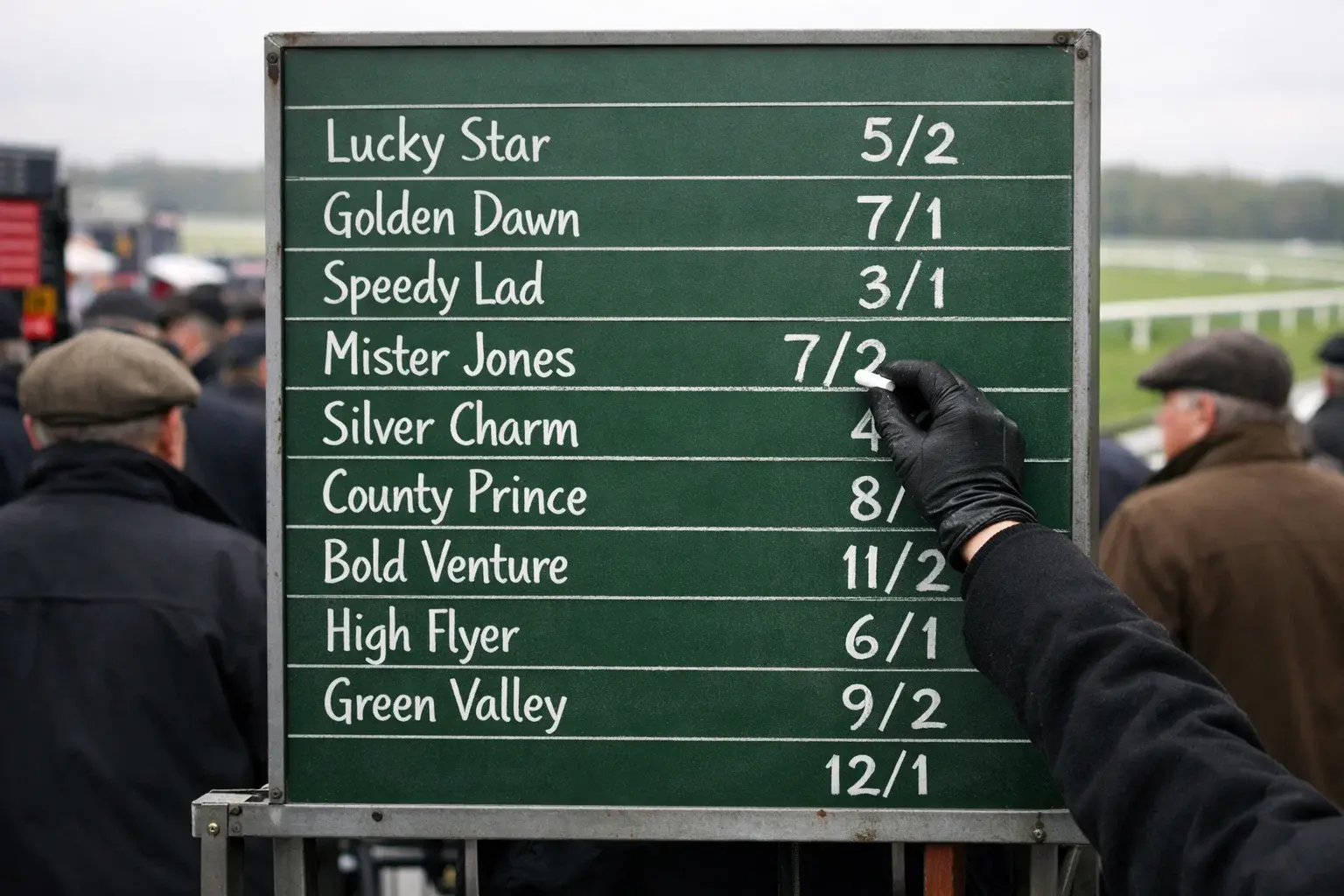
Better odds are one of the most frequently cited reasons for betting offshore. According to research by Frontier Economics for the Betting and Gaming Council, 29.6% of people using unregulated gambling platforms said that better odds and prices were a key motivation — placing it among the top five reasons alongside bonuses, anonymity, and ease of registration. The perception that non-GamStop bookmakers offer a pricing edge on horse racing markets is widespread. Whether it’s accurate is more complicated.
The UK’s remote betting sector generated £2.6 billion in gross gaming yield for the year ending March 2025, a 10.9% increase year-on-year. Horse racing accounted for £766.7 million of that total. Those revenues are built on margins — the gap between the true probability of an outcome and the odds the bookmaker offers. Every bookmaker builds margin into their prices. The question for punters navigating non-GamStop platforms isn’t whether margin exists, but how much of it they’re paying, and whether the odds edge they think they’re getting is real or illusory.
Odds Formats: Fractional, Decimal, and American
British punters grew up with fractional odds — 5/1, 11/4, 100/30 — and most UKGC-licensed bookmakers default to this format. The numerator tells you the profit, the denominator tells you the stake required to earn that profit. A £10 bet at 5/1 returns £60: £50 in profit plus the original £10 stake. Simple enough for round numbers, but fractions like 100/30 or 11/8 require mental arithmetic that not everyone enjoys doing at the betting ring.
Decimal odds dominate on non-GamStop platforms. Most offshore bookmakers are built for a global audience, and decimal pricing is the international standard. Decimal odds express the total return per unit staked, including the stake itself. An equivalent of 5/1 in fractional is 6.00 in decimal. A £10 bet at 6.00 returns £60 total — the same payout, expressed differently. The advantage of decimal odds is clarity: a higher number always means a bigger payout, and comparing two prices takes a glance rather than a calculation.
American odds appear on some offshore platforms, particularly those that also serve the US market. Positive American odds show the profit on a £100 stake (+500 means £500 profit from a £100 bet). Negative odds show how much you need to stake to win £100 (-200 means you need to bet £200 to win £100). For horse racing purposes, American odds are rarely useful to UK bettors and are best converted to decimal or fractional for comparison.
Most non-GamStop bookmakers allow you to switch between formats in your account settings. If you’re accustomed to fractional pricing, toggle the display before you start comparing. Misreading odds because of an unfamiliar format is one of the most common and most avoidable mistakes when transitioning from UKGC sites to offshore platforms.
What Determines a Bookmaker’s Margin?
A bookmaker’s margin — also called the overround or vig — is the percentage built into odds that ensures the book profits over time regardless of which horse wins. If a fair market on a three-horse race implies odds of 2.00, 3.00, and 6.00 (which sum to exactly 100% when converted to implied probabilities), a bookmaker might price them at 1.90, 2.80, and 5.50 instead. The implied probabilities now sum to more than 100%, and the excess is the margin.
For UK horse racing, margins on UKGC-licensed bookmakers typically range from 10% to 20%, depending on the race type and the size of the field. Handicaps with large fields tend to carry higher overrounds because more runners mean more opportunities to shade individual prices without any single one looking conspicuously short. Feature races — the Gold Cup, the Derby, the Grand National — attract sharper prices because of competitive pressure between bookmakers and high public visibility.
Non-GamStop bookmakers often operate with different margin structures. Some genuinely offer tighter overrounds on horse racing, particularly on international meetings where they face less competition for the market. Others advertise better headline odds on favourites while building wider margins into the rest of the field — a pricing tactic that looks generous on the surface but extracts more from bettors who back longer-priced runners.
Calculating overround is straightforward. Convert every horse’s decimal odds into implied probability (1 divided by the decimal odds), sum them, and subtract 100%. If a six-runner race has an overround of 12%, the bookmaker is taking roughly 12% from the total betting pool over time. If it’s 25%, the house edge is substantially steeper. Doing this calculation on a few races across different non-GamStop platforms quickly reveals which operators are genuinely competitive and which are relying on the assumption that their customers won’t check.
Comparing Odds Across Non-GamStop Platforms
Odds comparison on UKGC sites is easy. Tools like Oddschecker aggregate prices from dozens of licensed bookmakers in real time, showing the best available price for every runner in every race. For non-GamStop platforms, no equivalent service exists. The sites aren’t included in mainstream comparison tools because they don’t hold UKGC licences. Comparing odds across offshore bookmakers requires manual work.
The practical method is to open three or four non-GamStop sites simultaneously and check prices on the same race across all of them. Focus on the top three or four in the betting first — these are the runners where pricing differences have the most impact because they attract the heaviest stakes. A difference of 0.20 in decimal odds on a 3.00 shot is worth more in expected value than the same difference on a 50/1 outsider, simply because you’re more likely to need that edge on selections you actually back.
Timing matters. Horse racing odds are dynamic. They shorten as money comes in for a particular runner and drift when the market moves away. On UKGC sites, this movement is driven by high liquidity and thousands of bettors interacting with the market. On non-GamStop platforms, liquidity is lower, which means odds can move more erratically — sharp early prices may hold longer, but late market moves can be extreme because fewer bets are needed to shift the line.
Some offshore operators track UKGC prices and adjust their own markets accordingly, essentially mirroring the regulated market with a slight lag. Others set prices independently, which can create genuine arbitrage opportunities — a horse priced at 5.00 on one non-GamStop site and 4.20 on another. These discrepancies are more common on early-morning markets for afternoon racing and tend to narrow as post time approaches.
Keep a simple spreadsheet. Record the odds offered on your top selections across the platforms you use, note which site consistently offers the best price, and track your actual returns over fifty to a hundred bets. This data will tell you more about genuine odds edge than any promotional claim ever could.
When Better Odds Don’t Mean Better Value
Odds are only one variable in the value equation. A non-GamStop site might offer 6.00 on a horse priced at 5.50 elsewhere, but if it charges a 3% fee on withdrawals, imposes a 48-hour processing time, or caps maximum stakes at £50 on horse racing singles, the effective return can be worse than the shorter price on a UKGC platform with none of those frictions.
Withdrawal reliability erodes value in ways that don’t show up in an odds comparison. A bookmaker that pays out consistently and quickly has a real cost advantage over one that delays payouts, requests excessive verification documents, or imposes withdrawal limits that force you to spread your cashout across multiple transactions. These operational costs are invisible at the point of bet placement but compound over time.
The absence of Best Odds Guaranteed on most non-GamStop sites is another hidden cost. On UKGC platforms that offer BOG, you can take an early price knowing that if the starting price is higher, you’ll be paid at the better rate. Without BOG, taking an early price is a gamble in itself — the horse might drift, and you’d have been better off waiting. That optionality has tangible value, and losing it to gain a marginally better early price on an offshore platform may not be a net positive.
Then there’s the question of market depth. A bookmaker offering excellent odds on a six-runner conditions race but no markets on the afternoon’s nursery handicaps isn’t delivering better value overall — it’s cherry-picking the races where it can afford to be competitive and ignoring the rest. The odds edge on non-GamStop platforms is real in some markets and absent in others. Evaluating it honestly requires looking at the full breadth of your betting, not just the races where the offshore price happens to be longest.
